Interview: The Carpenter's Son director Lotfy Nathan on turning an apocryphal gospel into a horror movie about the daunting challenge of faith
The filmmaker, who was raised Coptic Orthodox, says he wanted to explore Joseph's relationship with Jesus, and "that burden and that duty that Joseph fulfilled."

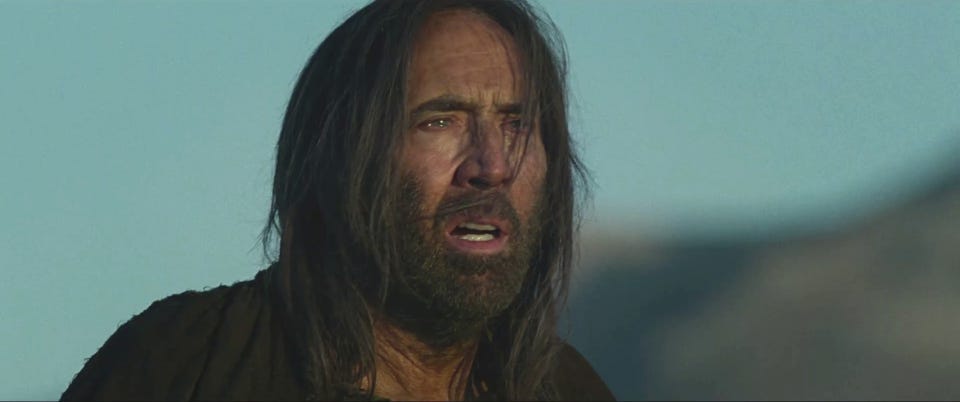
Born in England to an Egyptian family, Lotfy Nathan moved to the US as a child and studied painting as an adult at the Maryland Institute College of Art in Baltimore. While there, he started filming some local dirt-bike riders for a documentary class, and the project grew into an award-winning feature called 12 O’Clock Boys.
Nathan went on to film more documentaries and then, three years ago, he turned to narrative filmmaking with Harka, an Arabic-language film about a Tunisian man driven to an act of desperation by family and financial matters. It won the best actor award for Adam Bessa in the Un Certain Regard section at Cannes.
Now Nathan has made his first narrative feature in English—and it’s a horror movie inspired by one of the apocryphal gospels.
The Carpenter’s Son stars Nicolas Cage as Joseph, FKA twigs as Mary, and Noah Jupe as Jesus, and it takes place when Jesus is a teenager and the family is still living in hiding somewhere outside of Galilee. The film also stars Isla Johnston as “The Stranger”, a mysterious figure who just might be the Devil.
The movie is based on the Infancy Gospel of Thomas, an apocryphal text from the mid- to late 2nd century. The film doesn’t have a whole lot in common with the plot of that gospel, but it does draw significantly on the gospel’s depiction of the tense relationship between Jesus and Joseph, the latter of whom reprimands Jesus for terrorizing the neighbours with his supernatural powers.
The film is partly about Jesus’ growing self-awareness, but it’s also about Joseph’s struggle with faith and doubt. Unlike Mary, who carried the Son of God in her womb, Joseph’s faith was based on messages he got in dreams—and the film imagines how hard it might have been for him to keep trusting those dreams years after the fact, when Jesus is a teenager dealing with temptation and rebellious impulses.
The Carpenter’s Son comes out in the US today, and I had a chance to speak to Nathan shortly before the film’s release. What follows is a lightly edited transcript of our interview. It, in turn, is followed by a “Director’s Statement” taken from the press kit, plus a round-up of Nathan’s earlier films and/or the trailers for said films.
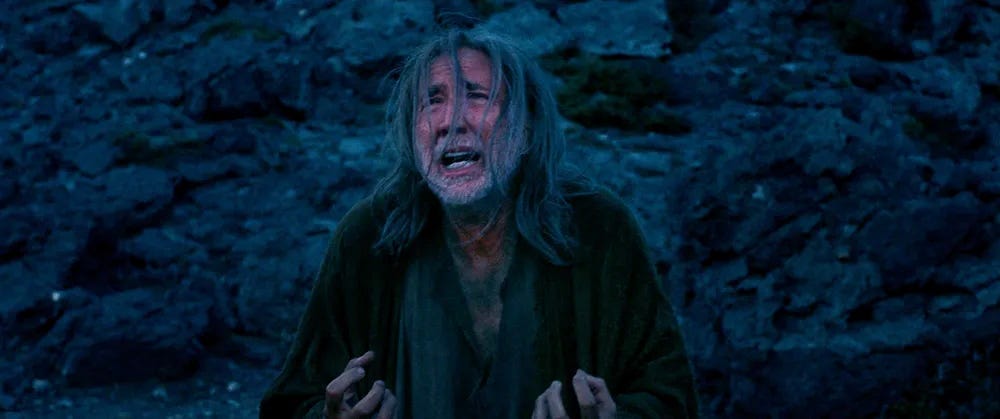
PTC: When I first heard about The Carpenter’s Son, I was intrigued because the idea of a horror movie (if I can use that word) based on the Infancy Gospel of Thomas made a lot of sense to me, because in that gospel, Jesus kind of terrorizes his neighbours, if I can put it that way. So I was very curious to see where the film would go with that. Then the trailer came out and I saw that Satan was a big part of the story and I thought, “Wait a minute, he’s not even in the Gospel of Thomas.” So can you talk about the evolution of the story? And of course, the Infancy Gospel is an infancy gospel. Jesus is very young, like five years old or so, and in your film, he’s a teenager. So talk about that, how you got from one to the other.
LN: Yeah, so this is a series of departures, obviously, right? Which is, I think, fairly typical in the filmmaking process.
It stemmed from that text; that was the first inspiration and what it was loosely based on, that being really just a different picture of Jesus’s life on earth, which was missing in the timeline of the New Testament, and that being sort of the crux of what I was taking from that text. Although there is some subtext in the Infancy Gospel that I was pulling from—I think something to do with the attitude of Jesus that seems to come out of that text, and then also Joseph.
But otherwise, I took plenty of liberties in telling that story and was trying to marry it with my own interests and questions about the missing pieces of the plot, but also with what could fit in the timeline of the New Testament. Eventually, it was an evolution in introducing Satan to the story, which was not appearing in the earlier drafts of the script. But it became, in the spirit of writing this apocryphal text— Which I guess, what is that? It’s just a meditation on the pieces [of the story] that are not accounted for. So that was my own natural progression.
PTC: My own initial assumption was that Jesus would be the terror, if you will. Are you familiar with a film called Brightburn?
LN: I have not seen it, but I heard mention of that.
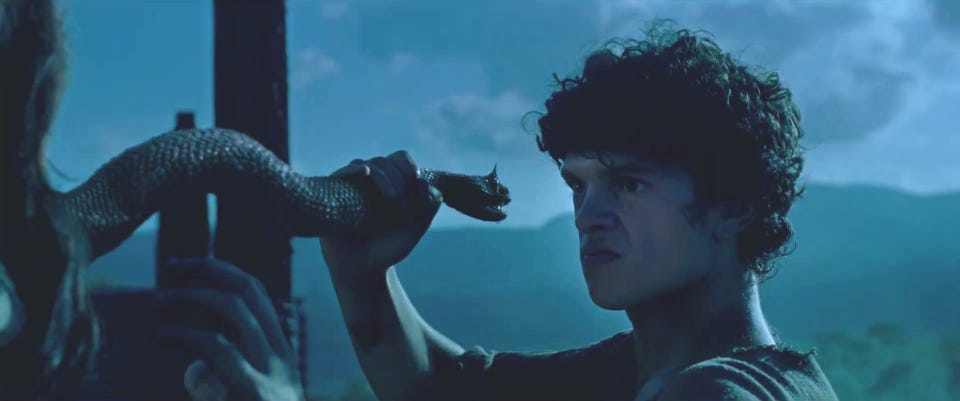
PTC: It’s like what if Superboy turned out bad, basically. And I imagined a film like that. So when I saw the trailer and I saw that Satan was tempting Jesus, it was a completely different dynamic than what I was expecting.
LN: I see.
PTC: You mentioned the Joseph-Jesus relationship, the dynamic there. I’ll put it this way: Whose story is this? Is this the carpenter’s story or the son’s story? It’s called The Carpenter’s Son. Whose story is it?
LN: Hmm. Well, I think that’s fairly subjective. I think that the story, to me— It was a family story going into it, is what I was trying to approach. Although it is, to me, very intriguing to explore Jesus’s coming of age and to meditate on what it could have been for Jesus to have met Satan as a child, as a teen in the case of this story. What if that happened before their encounter in the desert?
PTC: You made a comment in the press kit about the “dance” between the carpenter and the boy. When I read that quote, I thought, “Actually, yeah, in the Gospel of Thomas, I can kind of see that,” because Joseph is sort of reprimanding Jesus. Jesus sort of, like, flexes his powers with all the neighbours, but he kind of accepts a boundary of sorts with Joseph. He doesn’t go after Joseph the way he goes after the neighbours. I just thought that was an interesting dynamic that you teased out of the Infancy Gospel.
LN: Yeah. Although I would say the Infancy Gospel, it goes really off the rails, right? It’s a pretty unforgivable, unrelenting picture. And I think if I was to have just done a kind of one-to-one picture of that, it would have been not at all what I was after. You know, I wasn’t aiming ever to make an attack on Christianity. This is not my interest.
But I do think, for me personally, it’s interesting to see those human aspects that we might be able to relate to in our own way today, and how that morality and sense of purpose is found. You know, I wanted to explore this relationship between Jesus and Joseph that hadn’t been spoken about too much, but that burden and that duty that Joseph fulfilled, you know.
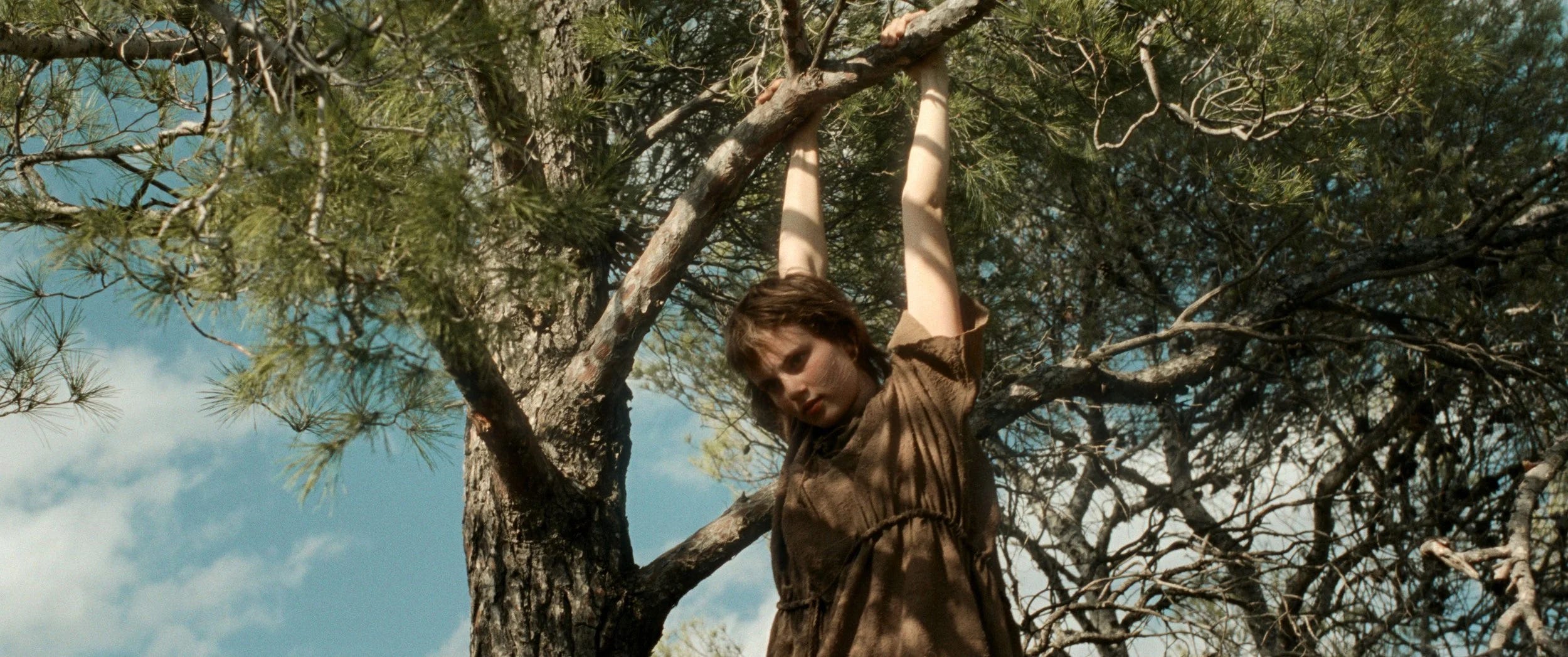
PTC: You talk about Jesus’s coming of age. Do you think Jesus matures over the course of the film? Because it felt to me like by the end of the film, his own attitude towards Satan, or relationship with Satan, didn’t feel fully resolved. Like maybe there’s still some growth ahead of him after this.
LN: Yeah, perhaps. Yeah, I think the general feeling I wanted by the end is that you feel that the journey has begun, to become that Jesus that people understand from the canon—that there’s still more story ahead between the end of the film and when things pick up in the Bible.
PTC: Okay. And you mentioned the timeline. This is—forgive me if this gets a little bit detail-oriented—
LN: That’s fine.
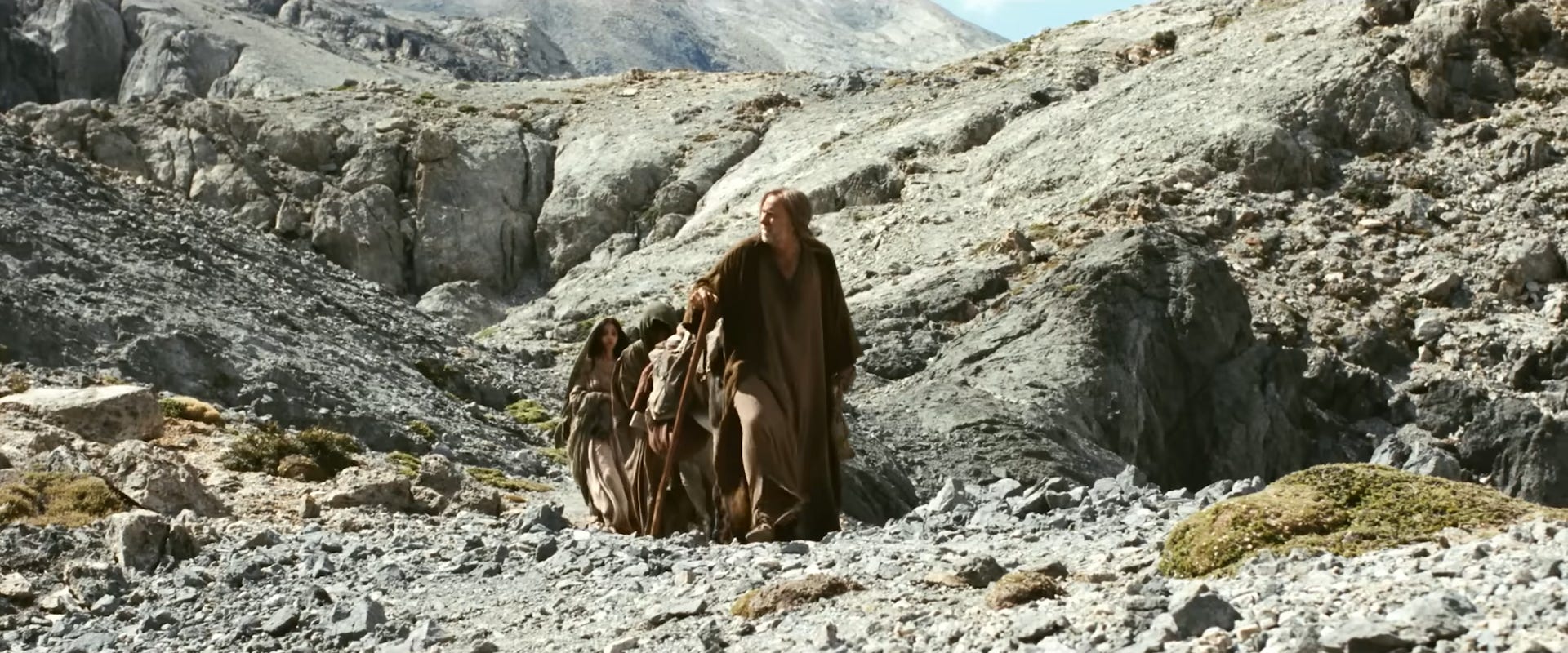
PTC: —but in the gospels, Luke’s gospel talks about the family going to the Temple when Jesus was 12 [Luke 2:41-52], which I assume would be before this movie happens, if they’re in the same timeline. And also, I was curious as to where the story takes place, because it seems that by the time he’s 12, he’s living in Galilee [in the gospels]. And in the press kit, I found a reference to [the movie taking place in] the Nile Delta. But there’s another quote that says something about [the movie taking place] west and south of the Sea of Galilee.
LN: So those are two very good questions. That’s it. You know, it makes for an inaccuracy in my story is the, I guess, the age of Jesus in this film, compared to the event and the visitation in the temple when Jesus has gone missing for three days and Joseph and Mary go and look for him. And he says, with a good awareness, “Do you not know I must be in my father’s house,” right? And that implies that he knows who he is by that age, right? So there’s an inaccuracy there. That’s what that is. But it was for the sake of the story and to have— You know, Noah was such a great performer and [I] wanted to have somebody at that age. So, you know, I suppose the much more accurate timeline version would have been to have a Jesus who was less than 12, right?
PTC: Right.
LN: Then your other question was—?
PTC: Location.
LN: Location. Exactly. Another question mark. It wouldn’t have been the Nile Delta or a part of Egypt because Joseph received instruction to return after the death of King Herod [in Matthew 2:19-23]. That would have been quite a bit earlier than Jesus’s teen years, first of all, right?
PTC: Oh yeah.
LN: And then so in speaking with a historian who I was working with, we did find the plausible place could have been this area southwest of the Sea of Galilee. “Roman Egypt” is maybe a bit of a mistake in the press kit. I essentially was loosening the focus on a couple of those facts to do with location. And the location itself is not of such huge importance in the story. The idea is that it’s remote and it’s an in-between place, you know, in his journey, in the story.
PTC: I’m not just asking in a sort of nerdy fact-checking sort of way, though I do have a bit of that. But there’s also a thematic thing. The film is—and I don’t mean this in a bad way—but the film is sort of very, very bleak. Joseph has doubts, doubts, doubts, doubts, doubts. And right from the beginning, right after the birth of Jesus, we’re fleeing soldiers who are throwing babies into the fire and all that stuff. And he sees a light—there is that. But the reason for the light in the gospels is that it’s summoning the shepherds or the Magi to come see the baby. That’s the positive thing. But we don’t get that. And so the depiction of Joseph as being beset by doubt, doubt, doubt, doubt, doubt—I like that, but was there any sort of consideration about possibly balancing the more positive and negative, if you know what I mean? Like if, as you say, in that story in the Temple, Jesus at the age of 12 is aware of who he is—which doesn’t necessarily preclude some of his adolescent struggles—Joseph had a little more to go on than just the fact that there was a light in the sky. You know what I mean?
LN: Mm hmm. Yeah. But by positive and negative, what do you mean? Do you mean something that feels more edifying for the viewer, more reassuring, or…?
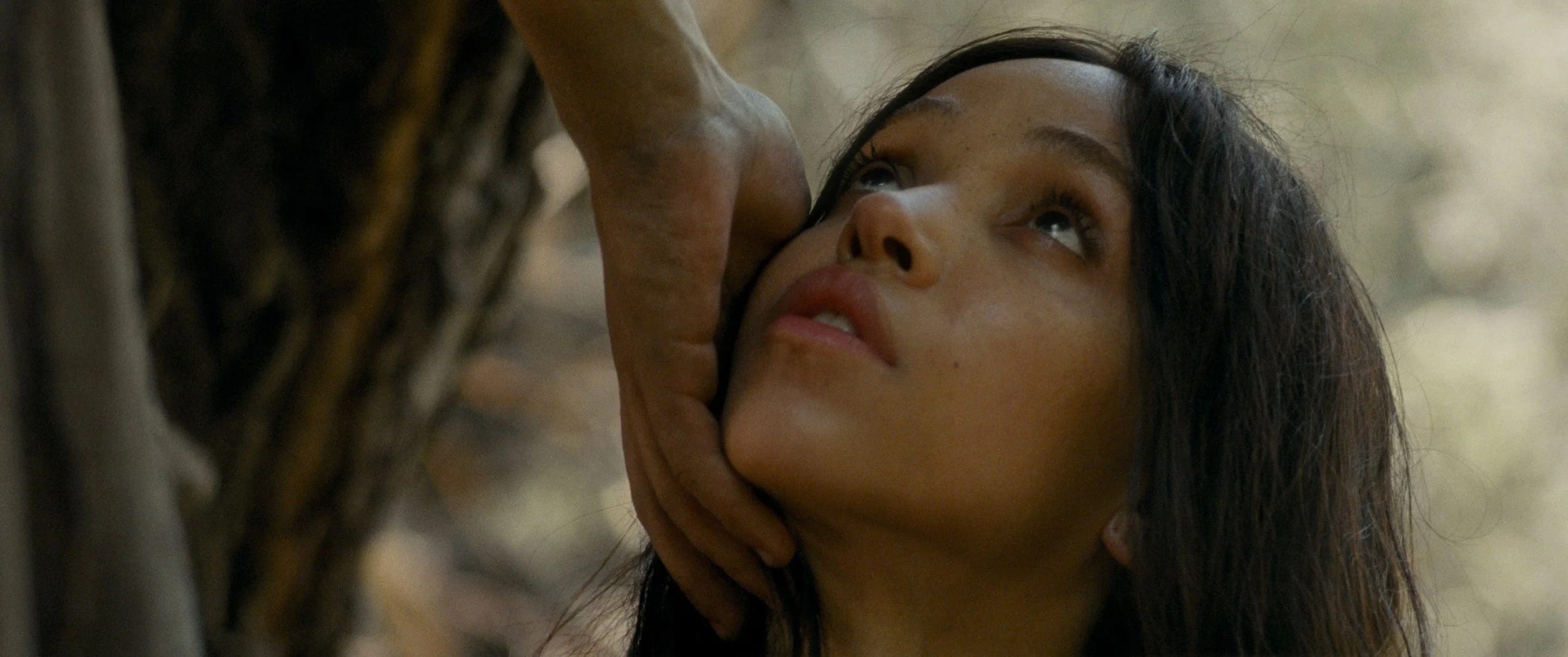
PTC: Not for the viewer. I’m thinking for Joseph. Joseph had more that he could cling to than just a dream that is growing ever more distant with time.
LN: Yeah. Okay, well, it’s a good question. I mean, it invites a few different conversations there.
I think for me, what was interesting to me about doing this film in the first place was to try to treat it with realism in mind, and to try to render a character who is really all too human—Joseph—and faith is purely a human thing that he has to draw from. And it is a constant challenge for him in my story. I thought that made for a more impactful character, you know, to think that Joseph, who was kind of as close to divinity as anyone could be outside of Mary, who had the inside understanding of having birthed Jesus. I imagine that she would have a kind of steadfast, clear, clear belief. Whereas Joseph, I thought that it would be very interesting to describe him as someone who was a human trying to deal with this, you know.
And then it’s also my effort in the genre application of it—or you call it a supernatural thriller or a spiritual thriller, whatever you’d call it—is not for shock, but more just an effort to look at that picture of the divine and these signs and messages as if they were real. And the shock that that could cause, and the overwhelming feeling, which I don’t think is necessarily positive or negative. I just mean that it’s daunting.
You know, when I think about paintings that I loved growing up, I studied art and think about all of Rembrandt’s work, you know, the the colour palette and the tone of a lot of those religious paintings are dark and muddy and murky, you know. But I think that they’re beautiful at the same time.
I think that there’s a whole spectrum where we don’t necessarily have to have this purely sanitized, easy picture of it, you know. That’s my feeling.
The Carpenter’s Son is now playing in theatres across the US.
Director’s Statement — from the press kit
As the writer and director of The Carpenter’s Son, I want to share some context about where this film comes from and what guided me in making it.
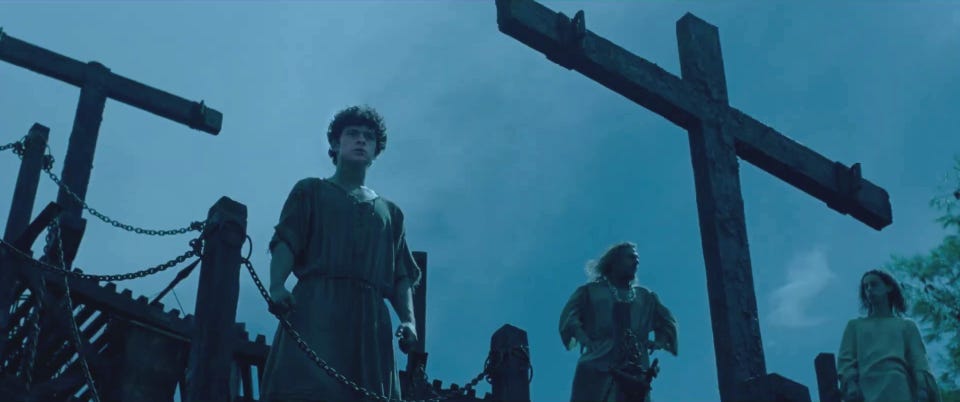
The film imagines a little-explored moment in the biblical narrative: the holy family’s time in exile, and the boyhood of Jesus during those years absent from the New Testament. Its inspiration came from the ‘Infancy Gospel of Thomas’, an apocryphal text introduced to me by my father, an avid collector of historical religious texts.
I grew up in the Coptic Orthodox Christian church. My grandmother, who raised me, was a devout believer. I was surrounded by faith as long as I can remember - I have respect for the way religion can provide people with a moral compass, community, and a sense of purpose. At the same time, since I was a child, the stories and imagery of the Bible have always fascinated me. Particularly, the parts left untold. Writing the script compelled me to research and learn far more about Christianity than I had before. In the process, I internalized aspects in ways I hadn’t expected.
While some may categorize The Carpenter’s Son as ‘horror’ or a ‘supernatural thriller’, for me, those labels are not meant to be a provocation. I see genre as nothing more than the choice of colors a painter might use in rendering an image. It’s my take, and my way of illustrating that time and place, with naturalism in mind, and having dwelt on what it would have meant to live in a time before science, before the age of reason, where every moment carried the weight of unseen spiritual forces.
It is also worth remembering that Christian culture has long engaged with art that grapples with the darkness of evil alongside the promise of redemption. From the Sistine Chapel’s visions of heaven and hell to Dante’s Inferno, images of terror and the supernatural have historically deepened the faith by illuminating what is at stake in the human soul. To look unflinchingly at evil is, paradoxically, to better understand the necessity of the good. That is the spirit in which I made The Carpenter’s Son.
-Lotfy Nathan
Lotfy Nathan’s earlier films
His first feature-length film was 12 O’Clock Boys (2013), a documentary about young men riding dirt bikes on the city streets of Baltimore. Here’s the trailer:
He distilled that film into a four-minute short called Riding with the 12 O’Clock Boys (2013) for the New York Times:
He directed the three-and-a-half-minute short Guavas and Ugali: Lupita Nyong’o at Home in Kisimu, Kenya (2016) for Vogue magazine:
He directed the 11-minute documentary Days of Black and Yellow (2019), about some of the issues facing taxi drivers in the age of Uber, for Field of Vision:
His first narrative feature was Harqah aka Harka (2022). Here’s the trailer:
And, now, he has directed The Carpenter’s Son (2025). Here’s the most recent trailer: